

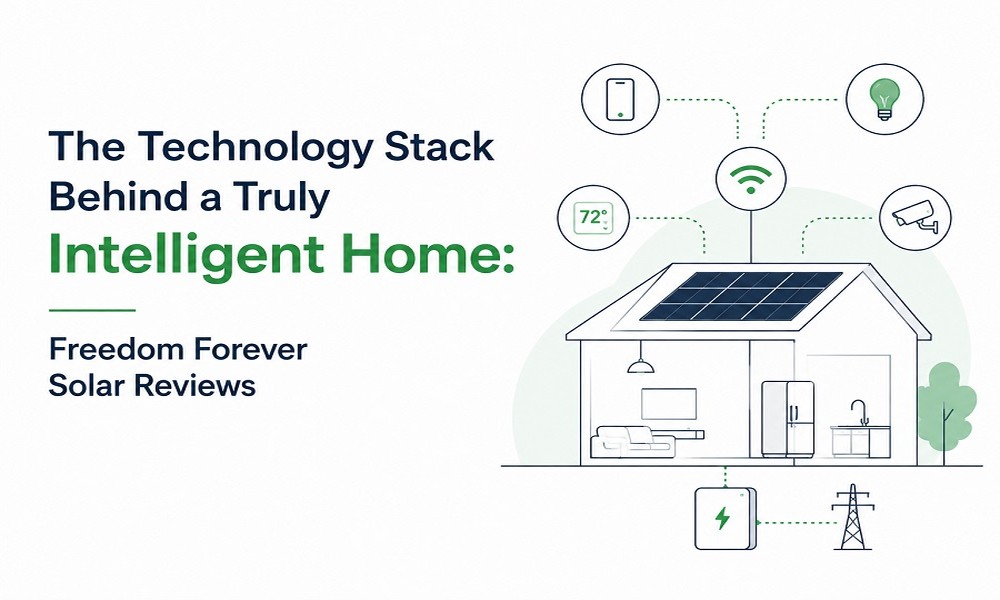
Solar has increasingly become part of the connected home. Panels continue to produce electricity, but the surrounding systems often influence how that power functions day to day. Storage, monitoring platforms, and smart controls can affect when a home uses solar, when it draws from the grid, and how the system responds during periods of higher demand or potential outages. Freedom Forever Solar Reviews reflect an industry that is gradually moving toward more integrated energy systems that combine generation with digital visibility and management tools.
Understanding how these layers interact helps explain why some solar homes feel more intuitive and responsive, while others remain focused primarily on production. The effectiveness of an intelligent solar setup typically depends on coordination between physical equipment and the software that monitors and manages it, allowing the system to adapt more smoothly to everyday conditions.
Energy Generation as the Foundational Layer
At the foundation of the technology stack sits energy generation. Solar panels convert sunlight into usable electricity, establishing the primary source of on-site power. Panel placement, orientation, and capacity influence how consistently energy enters the system.
Generation alone does not create intelligence. Panels operate predictably but passively. Their role is to supply reliable input that higher layers interpret and manage. This foundational layer defines what the system can support, while intelligence emerges through how production is coordinated and applied.
Inverters Translate Power into Actionable Data
Inverters form the next critical layer in the stack. They convert direct current from solar panels into alternating current used by household systems. Modern inverters also serve as data translators.
Beyond conversion, advanced inverters monitor output, manage safety functions, and communicate performance data to monitoring platforms. This connection bridges physical production and digital insight. Accurate inverter data allows other system layers to respond appropriately, supporting coordination and automation.
Energy Storage Adds Temporal Flexibility
Battery storage introduces flexibility by allowing energy to move across time. Batteries store excess production and release energy when generation slows or demand rises.
Storage supports continuity during grid interruptions and allows households to rely on local energy during higher-cost periods. Batteries operate in coordination with inverters and control platforms. Their behavior reflects system priorities rather than isolated functions. Storage turns solar production into a managed resource that adapts to household needs.
Smart Electrical Panels and Load Coordination
Smart electrical panels and load management devices distribute energy throughout the home. These components control which circuits receive power and when.
During routine operation, loads remain balanced. During outages, essential circuits receive priority. Load coordination supports resilience without disrupting daily comfort. Hardware at this layer enforces decisions made higher in the stack, translating software logic into physical response.
Monitoring Platforms Provide System Visibility
Monitoring platforms represent the most visible software layer for homeowners. Dashboards and mobile applications display production, consumption, and storage levels in accessible formats.
Visibility supports understanding. Households see how energy flows through the system and how different components interact. Monitoring also supplies data to automation and optimization layers, supporting informed system behavior beyond manual observation.
Automation Engines Coordinate Everyday Behavior
Automation engines sit above monitoring platforms, applying logic to energy management. These systems respond to predefined preferences and real-time conditions.
When production increases, automation may charge batteries or support appliance operation. When demand rises, priorities adjust quietly. Automation reduces manual oversight while maintaining consistency. Homes respond smoothly to changing conditions without constant input.
Cloud Platforms Extend Intelligence
Cloud-based platforms add another layer of coordination and insight. These systems aggregate data across days, seasons, and usage patterns.
Cloud platforms support software updates, feature improvements, and long-term optimization. Homes benefit from refined behavior without hardware replacement. This layer allows energy systems to improve continuously, supporting scalability and relevance over time.
Resilience Logic Manages Disruptions Smoothly
Resilience logic activates when grid conditions change. During disruptions, systems isolate safely and shift into prioritized operation.
Inverters disconnect appropriately. Batteries discharge strategically. Load controllers maintain essential functions. This coordinated response reflects preparation rather than reaction. The stack performs as designed under stress, supporting confidence and continuity.
Interoperability Supports Future Growth
Interoperability across system layers allows intelligent solar homes to grow over time. Components communicate through shared standards rather than closed systems.
This openness supports upgrades and additions. New storage, controls, or devices integrate without replacing existing infrastructure. Interoperability protects long-term adaptability, allowing homes to develop alongside technology.
Visibility Builds Confidence in Coordination
As systems grow more complex, transparency becomes essential. Visibility across layers helps households trust automation and coordination.
Freedom Forever reviews often highlight communication and access to system information, with homeowners noting the value of understanding how components interact across the energy stack. These observations reflect how clarity supports confidence. When households can see how systems respond together, reliance feels comfortable and informed.
Data Flow Connects Every Layer
Data ties the entire stack together. Production data flows from panels to inverters. Usage data flows from load controllers to monitoring platforms.
Automation engines rely on this information to guide decisions. Cloud platforms analyze trends to refine performance. Intelligence emerges from accurate data flow and interpretation rather than raw capacity alone.
The Architecture of an Intelligent Solar Home
An intelligent solar home is not defined by one device. It comes from the way the system is built end to end, from generation and conversion to storage, load control, monitoring, and the software that ties it all together. When those layers are designed to work as one, the home gets more than solar production. When those layers are designed to work together, the system can coordinate decisions, keep priorities steady, and stay practical as conditions change.
That coordination is what homeowners notice day to day. Monitoring brings clarity, automation reduces daily effort, and storage and controls support resilience when the grid is stressed. Over time, the same structure also makes it easier to expand or upgrade without starting over. When hardware and software are aligned, solar becomes easier to manage, easier to trust, and better suited for long-term living.