

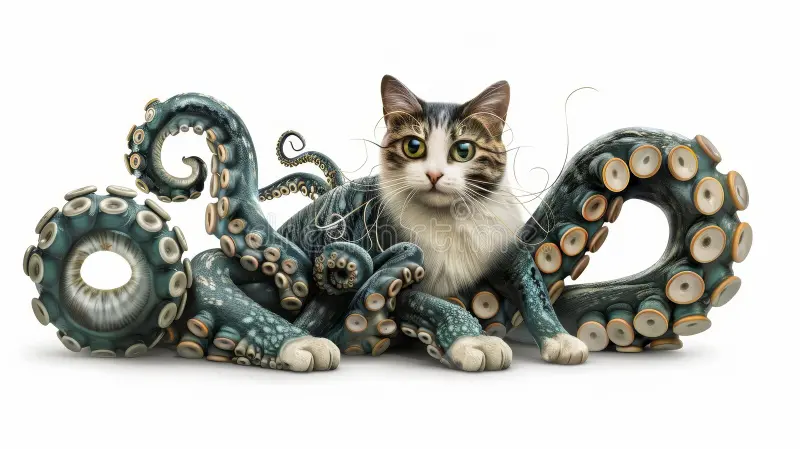
If you’ve ever watched a kitten curl up around a stuffed octopus, you may have wondered why.
Why tentacles?
The answer is gentler than you imagine.
Similar to the crochet octopuses used in hospitals for premature babies, gentle strands can simulate littermates. That feeling of proximity is important − particularly for early-weaned kittens or “velcro cats” who want constant contact.
A plush cat octopus toy is more than cuddly. For some cats, it can be deeply comforting.
It Echoes the Sensation of a Litter
Kittens enter the world warm and tactile.
They sleep in piles. They press into each other. They knead and nuzzle constantly.
That feeling goes away when a kitten gets adopted too young. Soft tentacles can provide a portion of that experience.
The different arms of a cat octopus toy offer:
- Gentle resistance to snuggle into
- Something to wrap paws around
- A safe object to knead
- Textured comfort similar to fur
For needy or nervous cats, this tactile feedback is comforting.
Why Do “Velcro Cats” Love Them?
Some cats love to be near you all the time. They shadow you from room to room. At night, they curl against your legs.
These “velcro cats” tend to crave physical security.
A plush toy with tentacles serves as a stand-in when you are busy or out. It provides a familiar texture they can grasp.
Most owners will notice their cat grooming or gently chewing at the tentacles of their cat octopus toy − a behaviour that indicates comfort.
It’s not about playing alone. It’s about reassurance.
The Link to Early-Weaned Kittens
Separation from a mother at a very young age can cause long term attachment behaviours.
These kittens may:
- Knead blankets excessively
- Suckle on soft fabrics
- Cry when left alone
- Seek constant touch
The tentacles of a soft toy offer something decent to knead and hold.
Unlike loose threads or potentially toxic materials, a dedicated cat octopus toy is built for gentle play and longevity.
It transforms an instinct from nature into safe, comfortable behaviour.
Comfort Doesn’t Replace Play
Though octopus toys are used mostly for comfort, they can also goof off.
Paired with an interactive cat wand toy, the tentacles can also be used to imitate prey movement for owners.
A wand toy attachment with tentacles provides two experiences:
- Active hunting during playtime
- Calm cuddling afterwards
That two-in-one nature appeals to both high-energy and anxious cats.
The softness invites rest. The movement triggers instinct.
Texture Matters More Than Shape
It’s more than just the octopus look.
It’s the feel that counts.
Cats respond strongly to texture. They have long flexible arms to:
- Grip gently
- Wrap their paws
- Press their face into fabric
- Create a nest-like shape
That little bit of sensory detail makes a huge impact.
Many owners report seeing their cats transport cat octopus toys to napping locations, as if it’s a companion.
When Emotional Comfort Is Important
Stress can be caused by life changes for a cat. New homes. New pets. New routines.
A familiar soft object can be helpful in transitioning.
A soothing toy does not substitute for attention. It supports it.
Cosy companionship combined with interactive play using a cat wand toy reinforces not only independence but bonding as well.
Final Thoughts
Cats may be independent, but many more crave closeness than we realise.
The soft tentacles of a stuffed cat octopus toy can emulate litter and bring comfort to velcro kitties or early-weaned kittens.
It’s a simple object. But sometimes a soft texture and familiar pressure are just what a sensitive cat requires.
Little comforts help a lot emotionally − especially for the cats who never stop craving contact.