

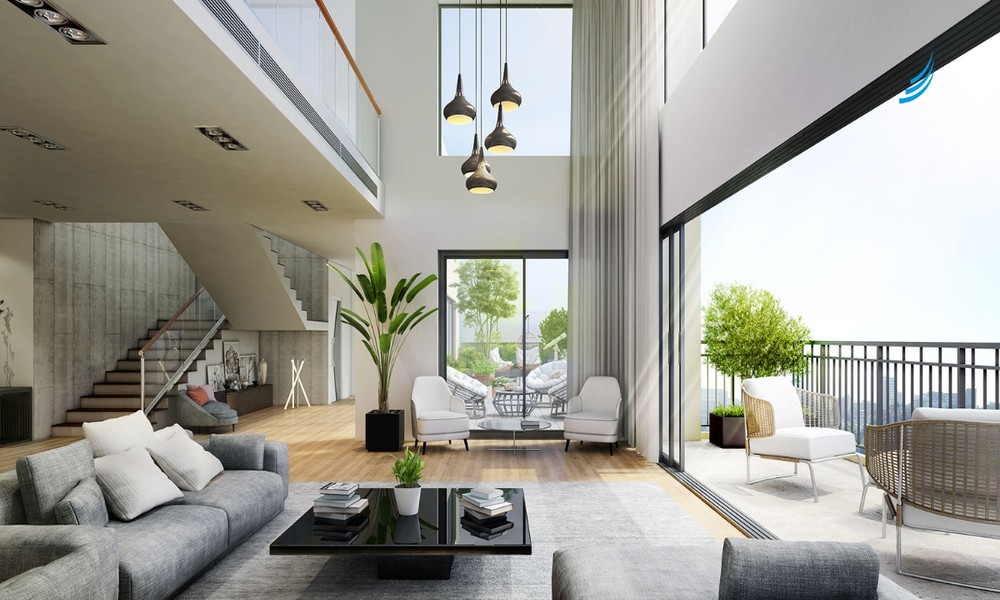
There’s a decision that happens online, before a buyer has ever stepped inside a property – before they’ve called an agent, before they’ve looked at the price. It takes about eight seconds. And it determines whether your listing gets a viewing request or a scroll. That decision is spatial. The buyer is asking, without consciously articulating it: can I see myself living here?
Standard photography has been trying to answer that question for decades. It can’t. Not fully. And the data is starting to make that undeniably clear.
The Problem with Designing for Cameras Instead of People
Good residential photography is optimized for impact at a distance. Wide angles, golden-hour light, carefully placed accessories. It makes a property look beautiful. What it cannot do is communicate how a space works. Buyers don’t just want to see a home – they want to understand it. They want to know whether the kitchen flows into the dining area, whether the second bedroom is genuinely usable, whether the living room has the scale they’re imagining.
Camera-optimized images compress space, flatten room relationships, and often misrepresent proportions in ways that serve the listing but not the buyer. The result: buyers book the wrong viewings. Sellers suffer unnecessary days on market. Agents spend time managing appointments that should never have happened.
The Days-on-Market Numbers
The National Association of Realtors’ 2023 Profile of Home Staging found that 53% of sellers’ agents reported staging reduced time on market. More granular MLS-level analyses paint a sharper picture. Properties listed with professional 3D floor plan visualization and virtual staging consistently show 30-50% fewer days on market compared to equivalent properties listed with photography alone.
The mechanism is straightforward. When a listing includes an accurate, walkable interior design 3D visualization, prospective buyers self-filter before booking a viewing. The people who schedule appointments have already decided, spatially, that this property could work for them. Viewings become confirmations rather than explorations. Deals close faster because less of the buying timeline is spent on misaligned discovery.
Based on industry reporting from NAR, Zillow research, and independent MLS analysis, the numbers compare as follows: average days on market drop from 45-60 days with photography only to 25-35 days with AI 3D visualization and virtual staging. Inquiry-to-viewing conversion improves from 12-18% to 30-40%. The share of listings receiving multiple offers rises from 20-25% to 38-45%. And the average premium above asking price moves from 0-2% to 4-8% – while visualization cost per listing falls from $1,500-5,000 to $150-400 with AI-native tools.
What Happens to Offer Price
The NAR staging study found that 23% of buyers’ agents reported staged homes increased offer values by 1-5%, while 18% reported increases of 6-10%. The psychology is not complicated. When a buyer can picture their life in a space before they visit, the emotional commitment begins earlier. By the time they arrive at a viewing, they’re not evaluating the property; they’re confirming it.
Virtual staging and AI virtual staging amplify this effect because they can be tailored to the style preferences of the target buyer demographic for a given property. The ability to style the same floor plan in multiple directions – without rebuilding the visualization from scratch – is what makes AI-native tools commercially viable for this use case. By contrast, unstaged, photography-only listings invite buyers to mentally discount the property. They assume the worst about vacant rooms. They subtract renovation costs from offer prices. And that hedging shows up in lower, more contingent offers.
Listing Conversion: The Attention Economy Problem
The average residential buyer views between 10 and 15 listings online before scheduling their first viewing. In that browsing phase, the primary selection filter is visual clarity. Listings with 3D floor plan visualization consistently outperform photography-only listings – independent research from listing portals suggests properties with 3D visualization receive approximately 50% more inquiries than equivalent properties without it.
A photograph stops a scroll. A spatially accurate interior design 3D visualization starts a conversation. Agents who have adopted spatial-first listing approaches report a meaningful improvement in inquiry quality, not just inquiry volume. The buyers who make contact have already done spatial due diligence. Their questions are more specific. Their timeline is more committed. Their offers are closer to asking.
How Foursite and Remodroom Make Spatial-First Listings Achievable at Scale
The historical barrier to spatial-first listing was cost and speed. Generating a spatially accurate 3D visualization required a specialist studio, three to four weeks, and a budget that only made sense for high-value properties. That barrier is gone.
Foursite by VirtualSpaces converts 2D floor plans and architectural blueprints into photorealistic interior design renders in minutes – correct ceiling heights, real window placement, actual room proportions. AI interior décor tools then style the space with photorealistic furnishings, lighting, and finishes. Remodroom extends this into existing-space redesign: upload a single room photograph, choose a style direction, and receive a photorealistic redesign of that actual room – new wall colors, furniture swaps, finish changes, all rendered realistically. For agents listing occupied properties and for interior designers working on renovation briefs, the before-and-after conversation can happen at the first meeting, before any work is committed.
Together, Foursite and Remodroom cover the two primary residential scenarios: new and off-plan properties where the floor plan is the source of truth, and existing homes where the room itself is the starting point. In both cases, the output is spatially honest, photorealistic visualization that helps buyers understand the space before they visit – at a fraction of traditional studio production cost.
Designing for the Person Behind the Screen
Every listing is ultimately a communication problem. Photography answers part of it. It shows buyers what the space looks like on a good day. It does not show how the space works, how it flows, how they might live inside it. Spatial visualization answers the rest. When Foursite converts a 2D floor plan to a navigable 3D environment, and when Remodroom transforms a room photograph into a styled, photorealistic redesign, the buyer is no longer being asked to imagine. They are being shown.
The numbers support it. The psychology supports it. And the tools, available today through VirtualSpaces, make it accessible to every practitioner who has a floor plan and an idea of what a buyer needs to see. That’s the shift: designing homes for the people who will live in them, not just for the camera that photographs them.
Note: Data cited is primarily from the US market, where research is more readily available. Indian market data remains largely anecdotal at this stage.